Mercedes
Geology
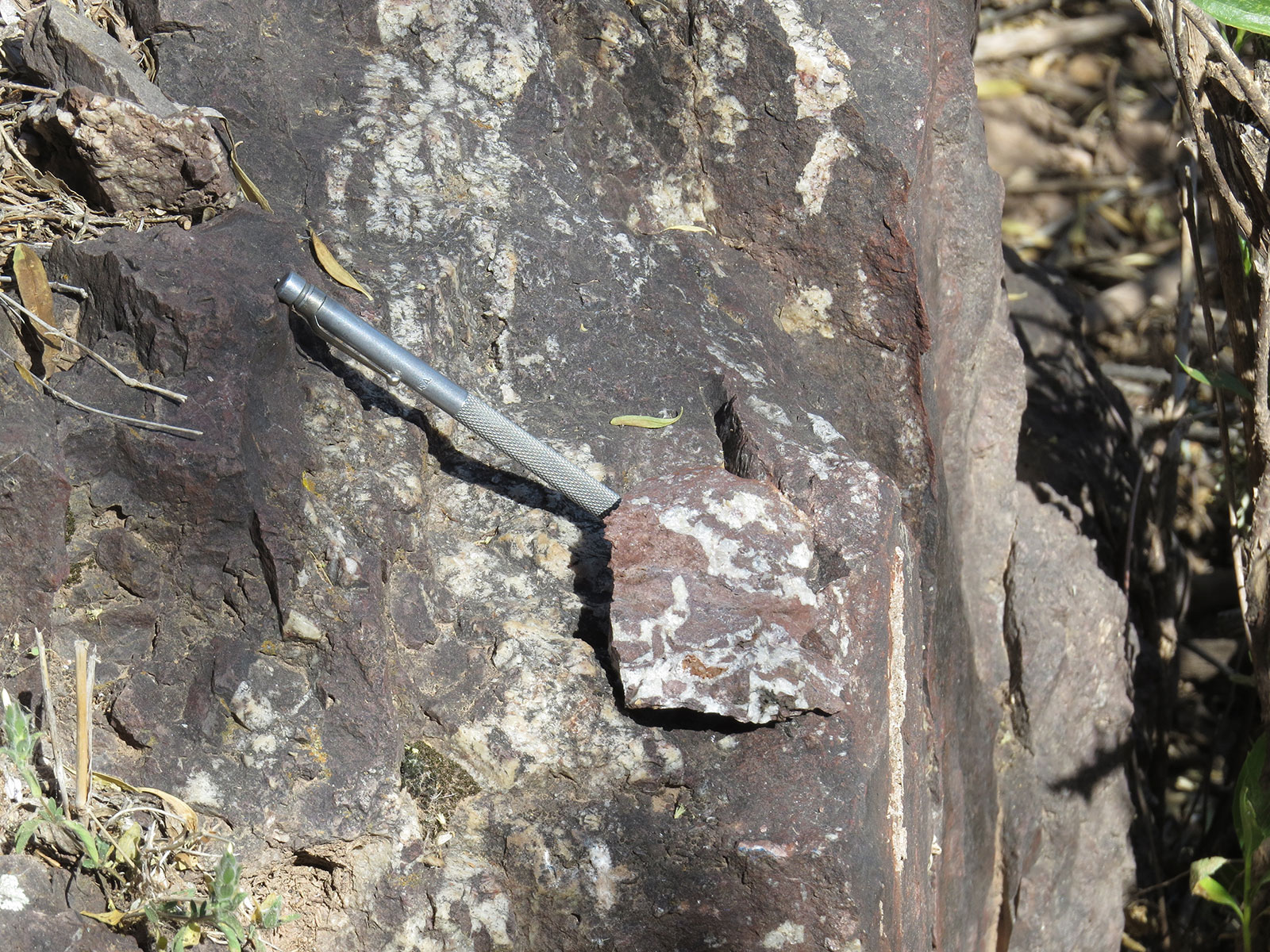
The project area is underlain by a thick sequence of shallow-marine carbonate and siliciclastic rocks of Jurassic to Cretaceous age, overlain by a well-developed volcanic package dominated by rhyolitic and andesitic flows and breccias.
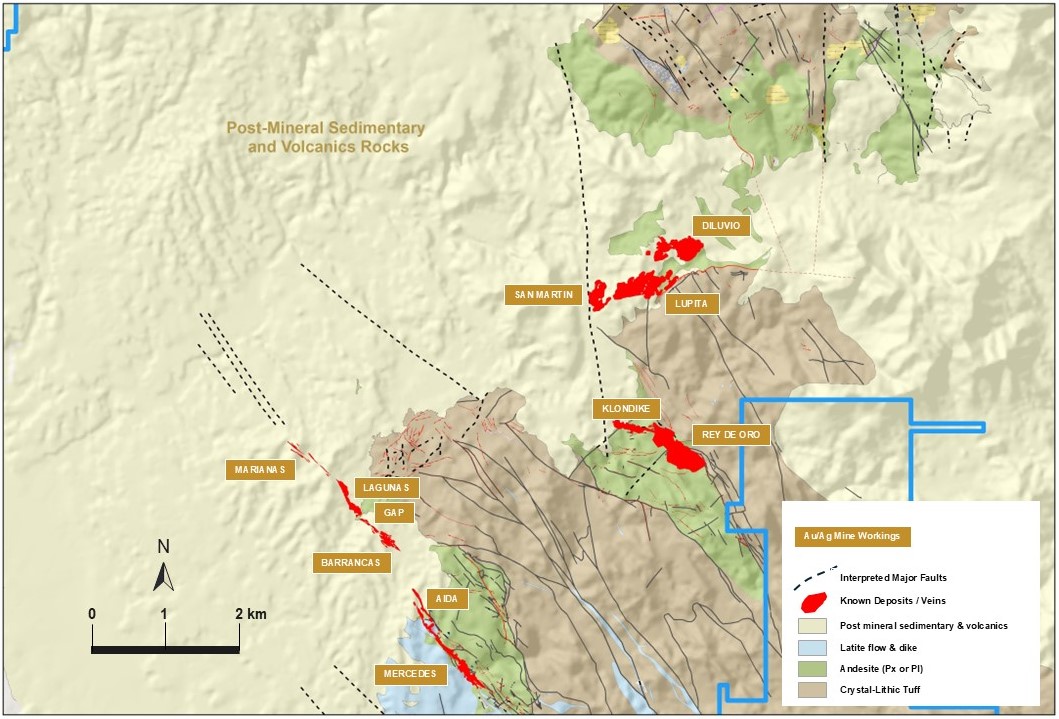
The andesitic volcanic sequence hosts the primary epithermal gold–silver mineralization. Mineralization is typically best developed near the basal portions of the andesite sequence, proximal to the rhyolite contact, within a vertically extensive low-sulphidation epithermal system.
Structural deformation has produced basin-and-range style faulting and folding, resulting in the development of west-northwest trending basins infilled by younger conglomeratic sediments derived from surrounding highlands.
More than 16 kilometres of mineralized low-sulphidation epithermal veins have been identified within and along the margins of the andesite-filled basins. Major vein systems generally trend northwest with steep dips, reflecting regional structural controls.
The mineralized system extends over a strike length exceeding 4 kilometres and remains open along strike and at depth, offering strong potential for continued resource expansion.