
Corani
Geology & Metallurgy
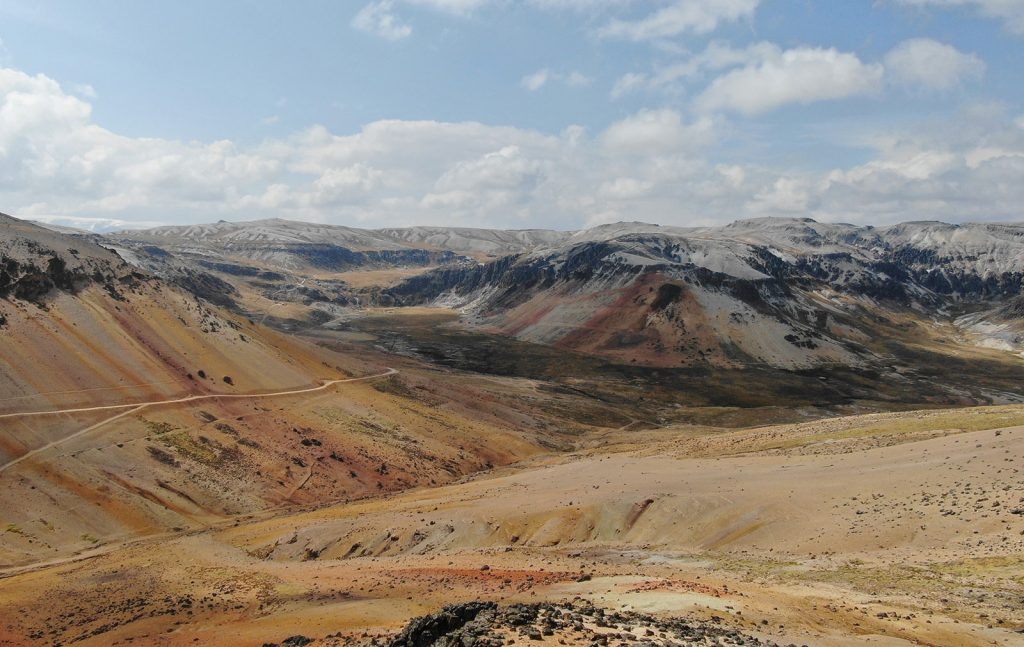
The Corani Project is situated within a high-altitude Andean desert environment characterized by volcanic bedrock, glacial gravels and limited vegetation. Wetland bofedal systems occur locally, while alpine puna grasslands dominate valleys and moderate slopes. Steeper slopes are largely barren due to erosion and harsh climatic conditions.
The property is underlain by Tertiary volcanic rocks of the Quenamari Formation, comprised primarily of crystal-lithic tuffs and andesite flows. Mineralization is hosted predominantly within the Chacaconiza Member — the youngest unit of the Quenamari Formation — consisting of crystal-lithic and crystal-vitric-lithic tuffs that are extensively altered, argillized, faulted and brecciated.
Corani is classified as a low- to intermediate-sulfidation epithermal silver-lead-zinc system. Mineralization is hosted within stockworks, veins and hydrothermal breccias across three principal deposits: Corani Main, Corani Minas and Corani Este. Alteration assemblages vary slightly between deposits but consistently demonstrate classic epithermal mineral signatures.
Surface exposures show mineralization associated with iron and manganese oxides, barite and silica, while drill core reveals typical Ag-Pb-Zn assemblages dominated by fine-grained argentian tetrahedrite (freibergite), the principal silver-bearing mineral at Corani.